


“I think you are the first doctors who have tried to get to know me,” he said, looking off in the distance. “Most of the time when I see doctors, they are so arrogant, telling me what is best for me. I don’t think a single one actually took the time to get to know me. How could they ever know what is best for me?”
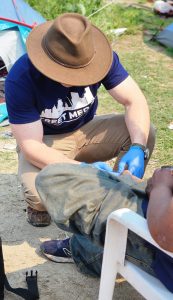
This is a refrain we have heard time and time again. On this particular day, we had spent over 30 minutes discussing this patient’s struggle with chronic pain, his use of illicit drugs for that pain, and the destruction it had brought to his life. Despite his honesty with past doctors and pleas for help, he felt shunned and stigmatized. He was treated poorly in ERs at many of the hospitals he had been to over the years, and struggled to find a primary care doctor who would help him navigate the complicated tangle of pain and addiction. The honest truth is that the U.S. healthcare system is not set up to serve most folks who use drugs, particularly those who are low-resourced, such as our unhoused patient.
Recently, I have been fielding questions about the state of fentanyl in the U.S. Rhetoric from our current leaders would have you believe that fentanyl is a scourge – the worst thing to happen to our communities in decades. While I agree that fentanyl has caused a crisis in our society, I think blaming the drug only avoids hard truths. When I hear people discuss fentanyl in this way, I find the negative feelings often drift from the drug to the people who use it. If fentanyl is so bad, the people using it must also be bad – they must have severe moral failings and an inability to control their behavior, or so the thinking might go. This belief is manifest in our media coverage, societal treatment, and continued criminalization of people who use drugs.
When we focus on a specific drug, we miss more important questions – why are people using drugs? What is it that drugs are providing? While the opioid crisis is severe, we are seeing rising rates of alcohol-related mortality, which kills many more people than opioids. There are increasing rates of stimulant use disorder nationally and worldwide, which are increasingly involved in overdose events. We have also seen steady rises in depression, anxiety, and suicide. In healthcare and economics, deaths that are largely preventable and related to mental health or substance use disorders are frequently lumped into the term deaths of despair. We often see these types of deaths clustered in communities suffering severe economic disparities.
Reframing the way we think about substance use is critical. Is it the cause of a problem—or the manifestation of one? From a societal level, we have to start wondering: What structural factors perpetuate substance use? What are the reasons we are seeing increases in other “deaths of despair?” And who is most affected in our society? I suspect that fentanyl is not the cause of the problem, but rather the manifestation of much more complex issues.
When approaching the care of people who use substances, I find the first place to start is understanding what benefit they receive from their use. What is it that they get from their substance? Understanding why people use drugs, in essence, the factors and motivators that perpetuate their use, is the first step towards helping them not use drugs. Only when you get to know the patient can you begin to help navigate what plan might be best for them.
And that is what our patient was telling us. He was sharing that we can’t know how to treat him until we actually know him. We are fortunate that in street medicine, we get to operate outside the pressures of traditional models of care. We get to spend 30 minutes diving into a patient’s history, because that is what is required. And, when we truly know our patients, we get the opportunity to really understand how to help them. To borrow from the great Jim O’Connell, one of the pioneers of homeless healthcare, “this kind of healthcare was never meant to be efficient.” As it turns out, in the most complex patients, efficiency is not a metric of success. That is why street medicine works – it is built out of compassionate, relationship-based medicine.
“I wish all doctors could be like you,” our patient said at the end of our visit.
Me too. I think U.S. healthcare could benefit a little from adopting some street med philosophy.
